A First Visit to a Local Craft Fair: How to Browse with Curiosity
A first visit to a local craft fair feels easier with a gentle plan for noticing materials, asking makers about their process and browsing without hurry.
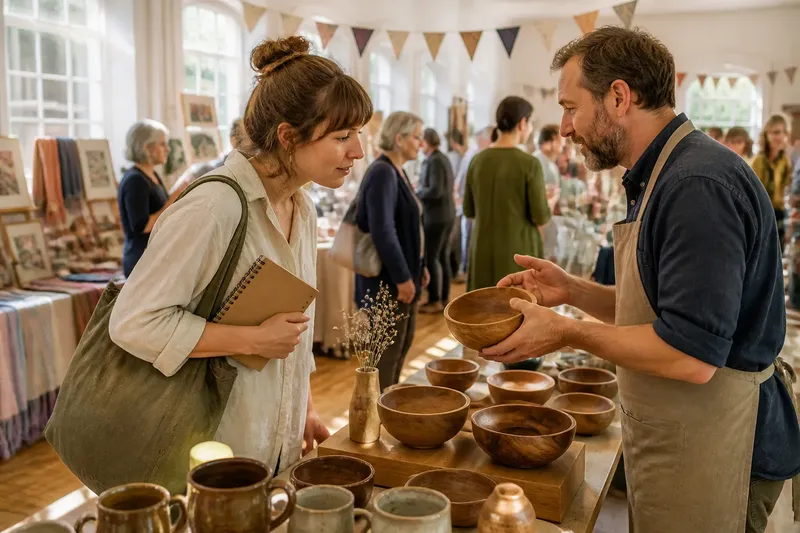
You pause beside a table of turned wooden bowls while the room fills with the soft scrape of chair legs and the murmur of conversation. At a local craft fair, there is no need to make a circuit at speed or arrive knowing what you want. A little attention to materials, a thoughtful question or two and space to wander can make an unfamiliar fair feel welcoming.
The most rewarding visit is often less like shopping from a list and more like learning how objects are made. You can leave with a purchase, an idea, or simply a clearer sense of the work and people around you. Start lightly, and let the day set its own pace.
How should I prepare for a first visit to a local craft fair?
Check the fair’s basic visitor information, then keep your plans loose. A venue map, opening arrangements, access details and any rules about dogs or photography can help you avoid small surprises. If the event is in a village hall, its entrance and room layout may be quite different from a large outdoor gathering.
Bring a bag that leaves your hands free, and consider carrying a notebook if you like recording names, materials or ideas. A phone can serve the same purpose, but ask before photographing a maker or their work. Some crafts involve designs or demonstrations that makers prefer not to have copied in images.
It can help to decide on a gentle intention rather than a shopping target. You might be curious about local clay, natural dyes, or how a familiar material is turned into something useful. That gives your attention a starting point without ruling out an unexpected discovery.
Arrive with enough time to look around, rather than trying to squeeze the fair between errands. If it is busy, take a breath at the edge of the room before stepping into the main flow.
What should I notice before I choose a stall?
Begin with the material itself. Look for the grain in wood, the texture of a woven surface, the slight variation in glaze, or the way a seam sits in a garment. These details offer clues about how an object was made and what kind of use it might suit.
Then notice the choices around the material. A potter may leave a thumbprint visible in the clay; a basket maker may combine reeds of different shades; a printmaker may use a limited palette that lets the paper show through. You do not need specialist vocabulary. Plain observations are enough to start a conversation.
Consider how an object feels in the hand, if the maker invites handling. Ask before lifting fragile work, and follow any signs or instructions at the stall. For a wearable item, you might ask about fit or care; for a bowl, whether it is intended for serving or display. The maker can explain what the object is suited to without turning your visit into a technical examination.
Notice how the maker presents the work, too. A small sample, a tool or a photograph of a process may help explain what is not obvious from the finished piece. Treat these as invitations to look, not as a test you need to pass.
How can I ask a maker about their process?
Ask an open question grounded in something you can see. “What kind of wood is this?” or “How did you get that colour?” gives the maker room to explain the choices behind the piece. If you are drawn to a particular detail, name it; a specific question is often easier to answer than “Tell me everything about your work.”
Listen for the path from raw material to finished object. The maker might describe where a material comes from, how it behaves, or which part of the process calls for patience. You can follow up with a question about use or care, especially if you are considering taking an item home.
Say you pause at a table of hand-stitched linen and notice that one edge is left slightly irregular. You could ask whether that finish is deliberate and what it changes about the cloth. The maker’s answer may help you understand the design, while giving you a natural way to decide whether the piece suits your home.
Be attentive to the maker’s pace. If they are serving another visitor, demonstrating a technique or packing a sale, wait for a quieter moment or simply enjoy looking. A fair is a working space as well as a place to browse.
What if I do not know the craft vocabulary?
Use ordinary words and point to the feature that caught your eye. “This surface feels rougher here” or “I’m curious about the pale blue” is clear, respectful language. Makers can supply a technical term if it helps, but you do not need one to take part in the conversation.
If a word is unfamiliar, ask what it means in this context. Craft terms can describe a material, a tool, a pattern or a particular stage of making. A brief explanation may connect several pieces on the table and make the display easier to read.
There is also room not to ask. You can watch, compare and form your own impressions; curiosity does not have to become conversation at every stall. A quiet visit is still a real visit.
How should I browse without feeling rushed?
Make one relaxed pass through the fair before deciding where to linger. The first circuit gives you a sense of the range: ceramics beside textiles, perhaps, with woodwork or small-batch prints farther along. It also helps you notice which stalls you want to revisit without buying the first attractive thing you see.
On a second pass, slow down at the work that held your attention. Compare the pieces closely, read any care information and ask questions that matter to your decision. If you are choosing between two objects, consider where each might live or how often you would use it, rather than treating the choice as a race.
Leave room for pauses. Step aside if you need to check a message or think; avoid blocking a narrow aisle while you do. A cup of tea or a seat, if the venue offers one, can make it easier to return to the stalls with fresh attention.
If you are not ready to buy, say so plainly and warmly. “Thank you, I’m going to look around and may come back” lets the maker know you appreciate their time without implying a promise.
What should I ask before buying a handmade object?
Ask about the details that affect your own use: care, intended purpose, materials and whether the item is one of a kind or part of a small run. For food-contact items or anything worn on the skin, check the maker’s guidance about use and cleaning. Where the answer depends on a product label, maker instructions or local rules, follow those rather than assuming every handmade object is used in the same way.
Look closely at the piece you will take home, not just a similar display item. Check that it suits the place or person you have in mind, and ask whether it can be wrapped for carrying. If it is delicate, find out how the maker recommends transporting it.
It is fine to ask the price before making a decision. If it is outside your budget, a simple thank-you is enough; you do not need to justify your choice. You can still appreciate the work and remember the maker’s name for another time.
Can I take photographs or handle the work?
Ask first, especially before photographing a maker, a demonstration or a close-up of a distinctive design. Some makers welcome pictures; others would rather visitors keep the work off camera. A quick question respects that difference and avoids making assumptions.
Handle objects only when it is clear that visitors may do so, or after asking. Use both hands for a piece that feels fragile, and return it gently to the place where you found it. For textiles, prints or jewellery, the maker may prefer to demonstrate a detail rather than have it passed around.
If photography is welcome, keep other visitors out of the frame where possible. A fair can be crowded, and people may not want to appear in someone else’s pictures.
What do visitors often ask at a local craft fair?
Is it rude to browse without buying?
No. Visitors are welcome to look and learn without making a purchase. A friendly greeting and care around the work are plenty in return for a maker’s attention.
Should I bring cash?
Payment options vary, so check the event information if it is available and bring a method that suits you. If you are unsure, ask at the stall before choosing an item rather than assuming every maker accepts the same forms of payment.
Can children touch the displays?
Ask the maker or follow any signs, since a sturdy wooden toy and a delicate ceramic piece call for different handling. Staying close and letting children know when to look rather than touch helps everyone enjoy the stall.
How do I find a maker again after the fair?
Ask whether the maker has a card, a shop address or another preferred way to keep in touch. If you take a photograph of their sign with permission, include the name as well as the work so you can identify it later.
How can I leave with more than a shopping bag?
Before you go, take a final look at the fair as a collection of working practices rather than simply a row of stalls. You may have noticed how local materials shape an object, how makers adapt a traditional technique, or how the same craft changes from one set of hands to another. Those observations can stay with you even if you leave empty-handed.
If a piece is coming home with you, keep the maker’s care advice somewhere you can find it. If nothing quite fits, note a material or name that caught your attention and look for the maker at another gathering. A first visit to a local craft fair need not produce a purchase to be worthwhile; leave with one clear detail you would like to notice again, and you will have a good reason to return.