Why Harvest Suppers Became a Way to Gather
Why harvest suppers became a way to gather: see how shared seasonal meals mark the work, uncertainty and mutual obligations behind a local harvest.
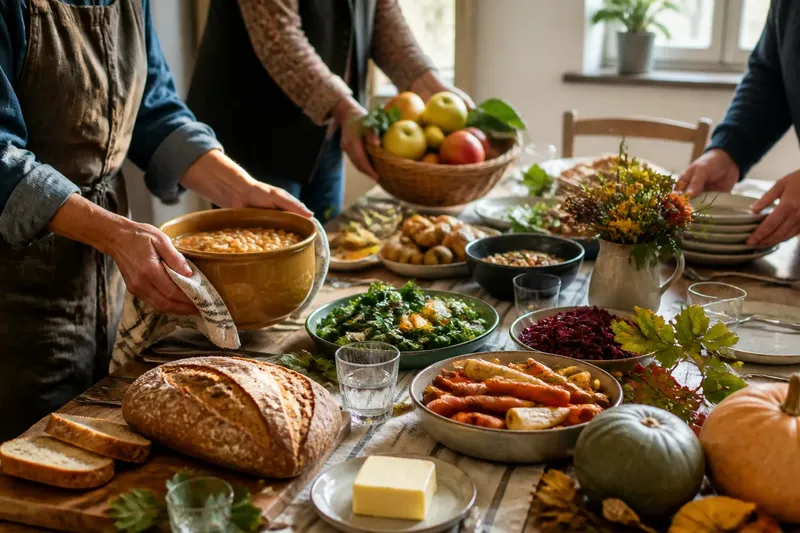
A table is pushed against the wall, a pot of beans arrives from one kitchen, and someone brings apples gathered from a nearby tree. A harvest supper can begin with little ceremony. Its deeper meaning lies in the shift from food as the result of separate work to food as something a community can acknowledge together. Why harvest suppers became a way to gather has no single answer, because the meal grew from practical needs and local customs that differed from place to place.
Why did harvest meals follow the work of gathering food?
For people whose meals depended closely on fields, orchards, fishing grounds or common land, a harvest was not simply a pleasant season. It was a consequential point in the year. Crops had to be brought in, fruit picked before it spoiled, and stores prepared for colder or leaner months. The work might be organised by households, but its timing and consequences were shared across a settlement.
That made the end of a demanding stretch of labour a natural moment for food and company. A meal could mark that a task had been completed, welcome helpers, or give neighbours a chance to recognise what had been brought in. It did not need a formal name to serve these purposes. People could eat together after work, at a household gathering, or as part of a religious or civic observance.
The meal also made seasonal change tangible. Grain, roots, preserved fruit and fresh produce on a table were visible evidence of what the land and the season had supplied. Sharing them turned an abstract calendar point into a common occasion: people could taste the year’s work and speak about what came next.
A harvest supper, then, was not only a reward after labour. It helped a community notice that one phase of the year had ended and another was beginning.
How did shared food express mutual dependence?
Harvest work often brought people into contact across household boundaries. Neighbours might lend hands, tools or space; families might exchange produce or help with processing and storage. The details depended on local arrangements, landholding, crops and custom. But where work was interdependent, eating together offered a visible way to recognise that dependence.
Food could be contributed in different forms. One household might have grain, another vegetables, another a dish made from preserved ingredients. The meal did not have to make every contribution equal. Instead, it gave people a setting in which giving and receiving could be seen as part of ordinary community life, rather than as an account kept strictly between two individuals.
Imagine a small settlement where several households have helped bring in a late crop. One family supplies a pot of soup, another brings bread, and a neighbour contributes pears from a garden. They eat in a shared room and talk about who still needs help storing food. The observable result is not simply a fuller table: the meal makes the exchange of labour and produce easier to recognise, while leaving practical obligations in view.
That social role matters because a harvest did not always produce abundance for everyone. A shared meal could express goodwill, but it could not erase unequal access to land, food or security. In some settings, an occasion might reinforce hierarchy as much as solidarity. Who hosted, who served, who was invited and who could contribute all shaped the meaning of the gathering.
When considering a local harvest custom, ask who was able to join the table as well as what was served.
What did the meal acknowledge beyond the crop?
Harvest gatherings often carried meanings that sat alongside practical work. They could mark gratitude, fulfil religious duties, honour a local patron or reinforce ties between workers and those who controlled land. In other communities, the emphasis may have rested more on family, neighbourhood or seasonal celebration. There is no single pattern that fits every region or period.
Beliefs about the source of food have also varied. Some communities have understood a successful harvest through religious observance; others have expressed thanks through customary gestures, shared feasting or seasonal rites. A meal might include prayer, music, speeches or no formal ritual at all. These elements were not decorative extras: they helped participants say what the gathering meant to them.
Nor did every harvest occasion happen after all work was finished. A feast could follow a particular crop, a communal task or a local festival, rather than the entire agricultural year. In places where food came from fishing, herding, foraging or several kinds of cultivation, the word “harvest” may only partly describe the seasonal cycle. The broader principle is an occasion linked to a supply of food and the work or relationships behind it.
That range explains why similar-looking meals can mean different things. Shared dishes may express thanks in one place, mark a labour arrangement in another, or simply bring people together at a useful point in the year.
How have harvest suppers changed as work and food changed?
As farming, employment and food distribution changed, the meal’s practical setting changed too. In many communities, fewer people now work together in a field or depend directly on the same crop. Food may arrive through shops and supply chains rather than from neighbouring plots. A supper can therefore preserve the social act of gathering even when the original pattern of shared labour has faded.
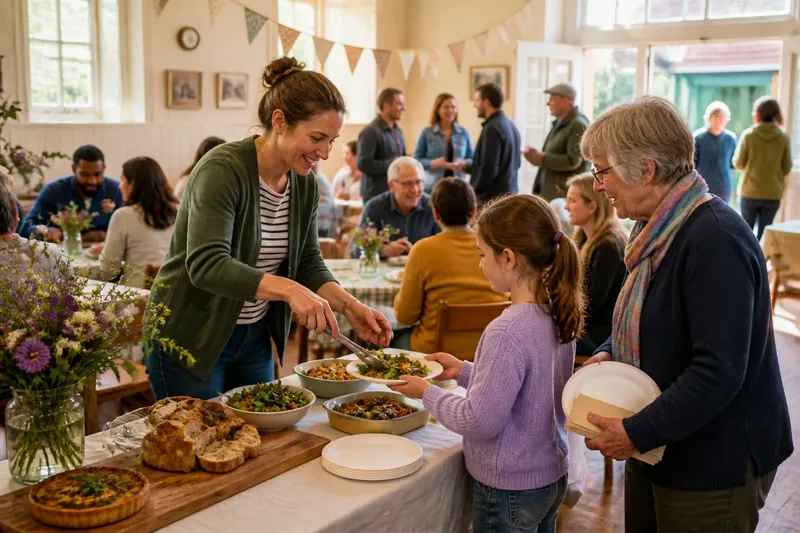
That does not mean a present-day event is merely a copy of an older custom. Organisers might connect it to local growers, a school garden, a place of worship or a community hall. Some gatherings invite people to bring dishes; others serve food prepared by a team. A meal may raise funds, welcome newcomers or draw attention to seasonal produce. These purposes can coexist, though organisers should be clear about which ones matter most.
Changes in the menu can be revealing. A local dish may remain central while ingredients shift, or a shared table may include food from several cultural traditions. That does not make the gathering less rooted in place. It shows that communities bring their own histories and present circumstances to the idea of seasonal acknowledgement.
One useful distinction is between continuity of form and continuity of meaning. People may still meet for a communal meal, while the reason for meeting changes. Conversely, the language of harvest may remain even when the event is mainly about neighbourhood life. Neither situation makes the custom inauthentic by itself; the important question is whether participants understand and shape the occasion honestly.
What should you ask about a local harvest supper?
Who is invited to take part?
Look for whether the gathering is open to the wider community, limited to a particular group or organised around an invitation. The answer helps explain whose relationships the meal is intended to strengthen.
What work or seasonal change does it mark?
Ask whether the event follows a crop, a gardening season, a local food tradition or a broader point in the year. A specific connection gives the supper meaning beyond its name.
How is the food provided?
Contributions might come from households, local growers, a communal kitchen or a combination of sources. The arrangement can reveal how the event understands sharing, hospitality and responsibility.
Which parts are familiar, and which are new?
Organisers and participants may keep a customary dish or gathering place while changing other details. Asking what has altered can show how people are making the occasion relevant without claiming that it has always been the same.
Why does the shared table still matter?
A harvest supper makes a local food system legible through ordinary things: a dish, a room, the people who prepared it and the season that brought them together. It can connect food to labour without pretending that everyone had the same share of either. It can also turn seasonal acknowledgement into a public act, one that allows neighbours to recognise effort, exchange stories and make room for new participants.
That is why harvest suppers became a way to gather: food offered a practical reason to meet, while the meal gave the meeting a shared meaning. The history is broad, not universal, and each community’s version carries its own choices about gratitude, work and belonging. If you attend one, notice not only what is on the table, but who brought it, who welcomes you and what local season the gathering is marking.